
One question, many threads: Google says Hydrogen widens the range of links and visuals in Search. (Illustration)
On November 12, Google released Gemini 4 Hydrogen and, the same day, put it into Google Search for all users worldwide. New AI models usually reach developers and paying subscribers first. This one went straight into the search box, which makes it worth understanding even if you never open an AI app.
Hydrogen, Carbon and Argon in plain language
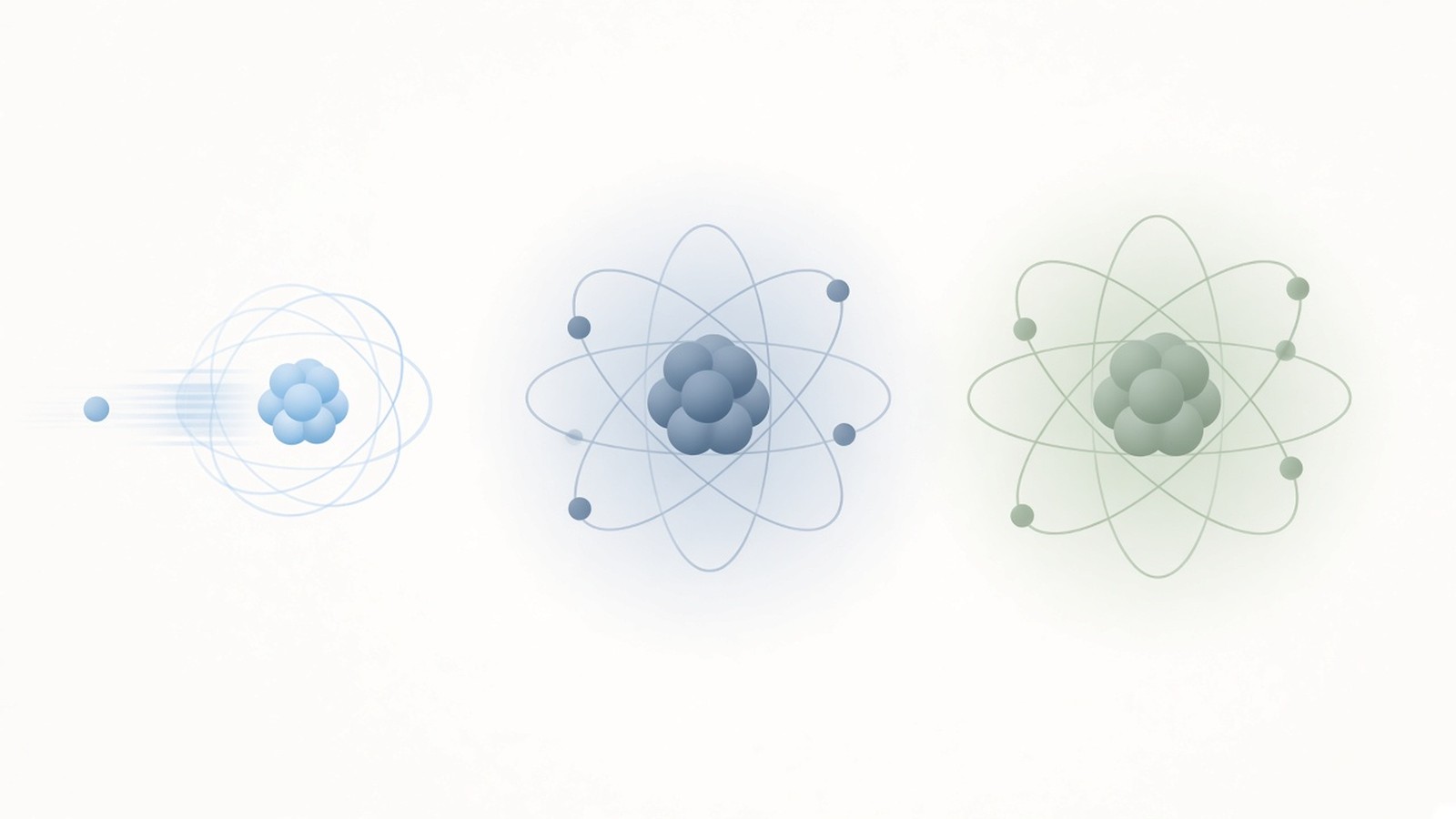
Google’s Gemini 4 family now has three members named after chemical elements. Google calls Gemini 4 Carbon and Gemini 4 Argon its “frontier models,” built for deep, long-horizon reasoning on the hardest problems. Hydrogen, fittingly the lightest element, is the fast and efficient member, which Google says is built for “rapid execution.” Reviewer Bijan Bowen describes it as the replacement for Gemini 3.8 Flash, Google’s previous fast model, and points out that Google DeepMind’s announcement describes Hydrogen as adapted from Carbon.
The YouTube channel NeuralNine offered a rough comparison with Anthropic’s Claude line: Argon is something like Opus, Carbon like Fable, and Hydrogen like Sonnet or even Haiku, while admitting he does not fully understand the naming. A simple way to picture it: Carbon and Argon are the senior specialists you call for a hard design problem; Hydrogen is the quick colleague who handles the daily workload.
Google also wants them to work together. A new Orchestrator feature in Google Antigravity, its AI coding tool, switches between Carbon and Hydrogen within one session. Google says that on the Terminal-Bench 4.0 test this reached near-Carbon success rates while using 24% less quota and finishing 19% faster on average.
Price matters for developers. Hydrogen costs $1.50 per million input tokens and $7.50 per million output tokens, flat across its one-million-token context window. Bowen noted that this sits between Anthropic’s Claude Sonnet 5.5 and OpenAI’s GPT-6.1 Terra. According to NeuralNine, Carbon and Argon move to $4 and $20 from December 1.
What changes in Search and the Gemini app
In Google’s Search announcement, Robby Stein, vice president of product for Search, calls this “the biggest model upgrade to Search yet.” Google promises four things. First, better understanding of messy questions, including ones with several parts, typos or very specific requests. Second, an improved “query fan-out,” in which Search runs simultaneous queries across the subtopics of a question, which Google says connects people to a broader range of links. Third, more visual answers, with images, comparison tables and custom tools. Fourth, more nuanced answers across all languages supported by AI Mode.
Search Engine Journal reported that Stein said on X that Hydrogen is now the default model in AI Mode and is being used for the hardest questions in AI Overviews. The same report noted that Google gave no figures for how many more links people will see, and that the switch landed during a Search core update, so website owners should be careful about attributing traffic changes to either one.
In the Gemini app, Google says Hydrogen follows instructions more closely, calls the right tools more often, and can pull context from uploads, Gmail, Google Drive and connected apps such as Airtable and Dropbox. Google lists it in the app’s model menu and says free users get it through automatic model selection when it is the appropriate model for a prompt.
Speed and accuracy: Google’s claims
Compared with Gemini 3.8 Flash, Google says Hydrogen finishes tasks 2.5 times faster at its default setting, more than triples the Terminal-Bench 4.1 score (57% versus 18.2%), and cuts fabricated claims by more than five times. It reports that Hydrogen edges out Argon on the Artificial Analysis Intelligence Index, 51 to 50 at its default “high” thinking level, rising to 54 at a new “xhigh” level. There are four thinking levels in all, from low to xhigh, so users can trade depth for speed and cost. On safety, Google cites a 94% honesty rate on an internal agent test and more than 2.3 times better resistance to indirect prompt-injection attacks. These figures come from Google and have not been independently audited.
Two short official videos show Hydrogen building an interactive 3D water-and-glass visualizer and assembling a narrated archival video about the element hydrogen from public-domain footage.

What independent testers found
Bowen, who had no early access, ran his usual test suite, mostly at the xhigh level and with an agent “swarm” feature. His standout results were a subway shooter game he found genuinely fun and a 3D-printable model of a sitcom apartment built from a single image, which he called “absolutely fantastic” and which printed without supports. Weaker spots included a skateboarding game that was “not really at the level of polish” he hoped for, a robot-arm task that succeeded but took about an hour (he blamed his own choice of the slowest setting), a voice feature that failed, and graphics that needed repeated retries. He estimated the whole session used about 4% of his weekly allowance on a plan he believes costs $200 a month.
NeuralNine’s one-prompt game test was more mixed. At the default high setting, Hydrogen’s game “just straight up doesn’t work,” he said. At xhigh, it produced what he called “the best of the Gemini results,” though still behind Anthropic’s Fable and Opus. He also found the Gemini models unusually verbose. Even so, he plans to use Hydrogen at xhigh for personal projects.
Caveats
Most performance numbers are Google’s own. The Search improvements are described in qualitative terms, without figures. The best independent results came at the slowest, most expensive setting, and the default may disappoint on hard tasks. Fewer fabricated claims is not zero, so AI answers in Search still deserve a second look at the linked sources.
Hydrogen is a meaningful upgrade to the AI built into Google Search, and early hands-on tests suggest it is a strong fast model. Whether it makes Search answers better in daily use is something users and independent reviewers will judge over the coming weeks.
References
- Google: Introducing Gemini 4 Hydrogen — https://blog.google/innovation-and-ai/models-and-research/gemini-models/introducing-gemini-4-hydrogen/
- Google: Google Search gets a major upgrade with Gemini 4 Hydrogen — https://blog.google/products-and-platforms/products/search/gemini-4-hydrogen-search-upgrade/
- Bijan Bowen: Gemini 4 Hydrogen Is the BEST Flash Model Yet – Full Test! — https://www.youtube.com/watch?v=prA0iTPDqfo
- Google Gemini: Build Interactive 3D Visualizers — https://www.youtube.com/watch?v=oh8AyMFU5S8
- Google Gemini: Go From Idea to Finished Video — https://www.youtube.com/watch?v=k1Y_dohjajA
- NeuralNine: Google is Back: Gemini 4 Hydrogen, Carbon… — https://www.youtube.com/watch?v=GyUkqLPjYVQ
- Search Engine Journal: Gemini 4 Hydrogen default in AI Mode — https://www.searchenginejournal.com/google-gemini-4-hydrogen-default-ai-mode/597096/











Recent Comments